
Vedic Jyotish Shastra – Complete Guide
Vedic Jyotish Shastra – Complete Guide
Vedic Jyotish Shastra is an ancient Indian knowledge system traditionally used to study planetary positions, zodiac signs, Nakshatras and their relationship with human life. It is an important part of India's traditional knowledge and cultural heritage.
In this guide, we will explore the basic concepts of Jyotish Shastra, including Navagraha, twelve Rashis, twenty-seven Nakshatras, twelve Bhavas, Kundli, Dasha and other important principles.
1. What is Jyotish Shastra?
Jyotish Shastra is a traditional branch of Indian knowledge that studies celestial movements and their symbolic interpretations. The word "Jyotish" is associated with light and the study of celestial bodies. It traditionally helps people understand planetary positions through the preparation and interpretation of a Janma Kundli.
2. The Nine Grahas – Navagraha
Navagraha refers to the nine celestial influences considered in traditional Vedic astrology. Each Graha has a distinct symbolic meaning.
- Surya – Sun
- Chandra – Moon
- Mangal – Mars
- Budh – Mercury
- Guru – Jupiter
- Shukra – Venus
- Shani – Saturn
- Rahu – North Lunar Node
- Ketu – South Lunar Node
3. Twelve Rashis – Zodiac Signs
In Vedic astrology, the zodiac is divided into twelve Rashis. Each Rashi occupies a specific portion of the zodiac.
- Mesha (Aries)
- Vrishabha (Taurus)
- Mithuna (Gemini)
- Karka (Cancer)
- Simha (Leo)
- Kanya (Virgo)
- Tula (Libra)
- Vrishchika (Scorpio)
- Dhanu (Sagittarius)
- Makara (Capricorn)
- Kumbha (Aquarius)
- Meena (Pisces)
4. Twenty-Seven Nakshatras
Nakshatras are lunar constellations used in traditional Vedic astrology. The zodiac is divided into twenty-seven Nakshatras, each having four Padas or quarters.
Ashwini, Bharani, Krittika, Rohini, Mrigashira, Ardra, Punarvasu, Pushya, Ashlesha, Magha, Purva Phalguni, Uttara Phalguni, Hasta, Chitra, Swati, Vishakha, Anuradha, Jyeshtha, Mula, Purva Ashadha, Uttara Ashadha, Shravana, Dhanishta, Shatabhisha, Purva Bhadrapada, Uttara Bhadrapada and Revati.
5. Twelve Bhavas in Kundli
A Janma Kundli is traditionally divided into twelve houses, known as Bhavas. Each Bhava represents a different area of life in astrological interpretation.
- First Bhava – Self and personality
- Second Bhava – Family, speech and wealth
- Third Bhava – Courage, communication and siblings
- Fourth Bhava – Home, mother and comfort
- Fifth Bhava – Education, creativity and children
- Sixth Bhava – Service, competition and challenges
- Seventh Bhava – Marriage and partnerships
- Eighth Bhava – Transformation and longevity
- Ninth Bhava – Dharma, fortune and higher learning
- Tenth Bhava – Career and profession
- Eleventh Bhava – Gains and aspirations
- Twelfth Bhava – Expenses, isolation and spirituality
6. What is a Janma Kundli?
Janma Kundli, also known as a birth chart, is prepared using the date, time and place of birth. It represents the traditional astrological positions of Grahas, Rashis and Bhavas at the time of birth.
Important elements of a Kundli include Lagna, Rashi, Nakshatra, planetary positions and house placements.
7. Understanding Lagna
Lagna, or Ascendant, is the zodiac sign rising on the eastern horizon at the time and place of birth. In traditional Jyotish interpretation, Lagna is an important starting point for studying a birth chart.
8. Graha Drishti and Yuti
Graha Drishti refers to planetary aspects, while Yuti refers to the conjunction of two or more Grahas in the same sign or house. These concepts are considered during traditional Kundli interpretation.
9. Dasha and Antardasha
Dasha is a traditional planetary period system used in Vedic astrology. Antardasha refers to a sub-period within a major planetary period. These systems are used by astrologers to study different phases in a person's life according to traditional principles.
10. Panchang and Its Five Elements
Panchang is a traditional Hindu calendar system based on five important elements:
- Tithi – Lunar day
- Vaar – Weekday
- Nakshatra – Lunar constellation
- Yoga – A calculated astrological combination
- Karana – Half of a Tithi
Panchang is traditionally consulted for understanding dates, festivals and selecting auspicious timings.
11. Three Traditional Branches of Jyotish
- Siddhanta: Traditional astronomical calculations and celestial movements.
- Hora: Astrology related to individual birth charts and predictions.
- Samhita: Traditional study of broader events and natural phenomena.
12. Why Learn the Basics of Jyotish Shastra?
Learning the basic concepts of Jyotish Shastra helps readers understand traditional astrological terminology and the structure of a Kundli. Knowledge of Grahas, Rashis, Nakshatras and Bhavas provides a foundation for further study of this traditional subject.
Frequently Asked Questions
What is Jyotish Shastra?
Jyotish Shastra is a traditional Indian system that studies celestial movements and their astrological interpretations.
How many Grahas are considered in Vedic astrology?
Nine Grahas are traditionally considered: Surya, Chandra, Mangal, Budh, Guru, Shukra, Shani, Rahu and Ketu.
How many Rashis are there?
There are twelve Rashis in the traditional Vedic zodiac system.
How many Nakshatras are there?
The traditional system uses twenty-seven Nakshatras, each divided into four Padas.
Learn More About Traditional Jyotish
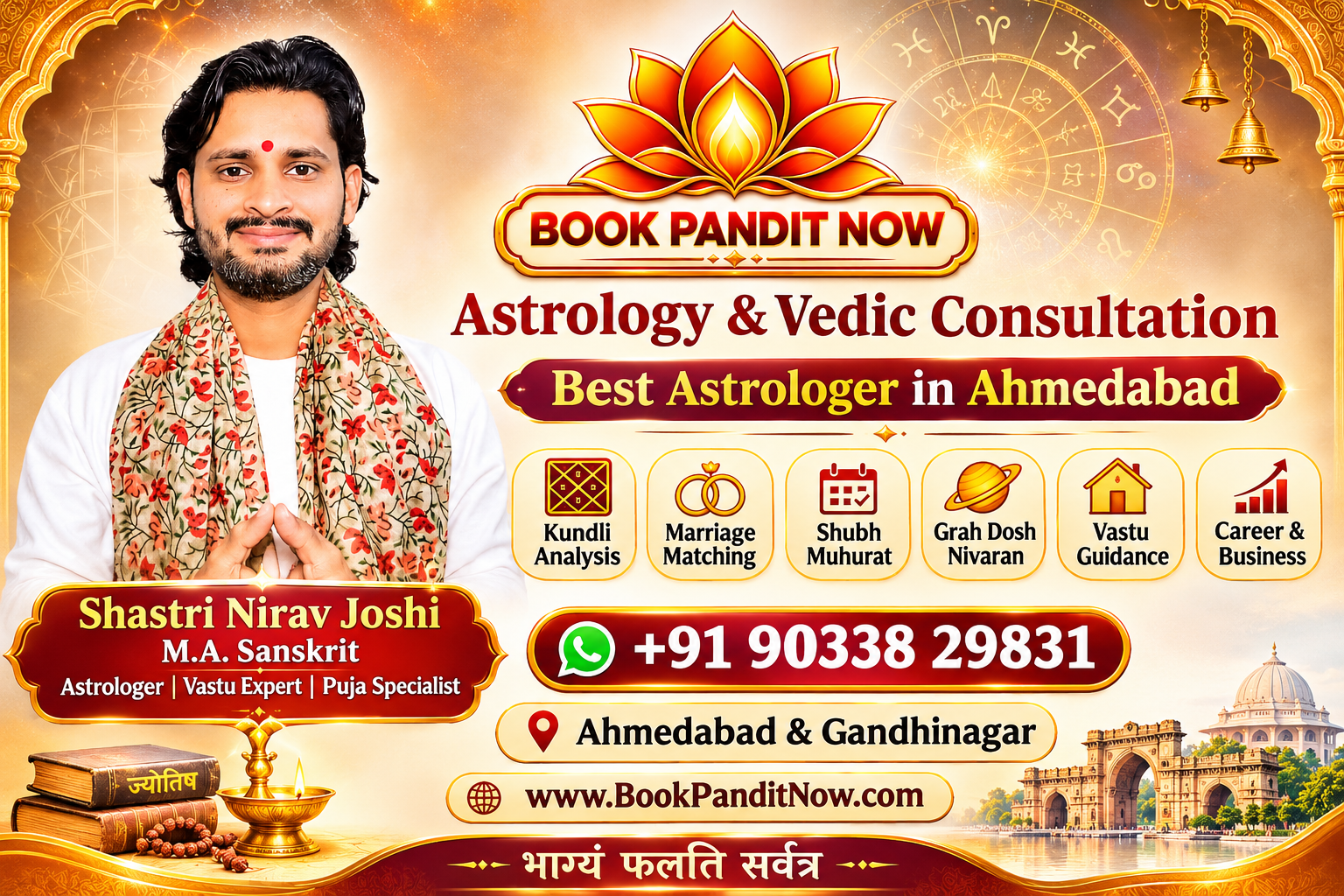
Shastri Nirav Joshi, M.A. Sanskrit, shares knowledge of traditional Jyotish Shastra and Vedic practices through BookPanditNow.
BookPanditNow.com
Shastri Nirav Joshi
Pandit Ji | Astrologer | Vastu Consultant
ભાગ્યં फलति सर्वत्र
Disclaimer: Jyotish Shastra is a traditional belief and knowledge system. Its interpretations are not scientifically established facts and should not replace professional advice or decisions.